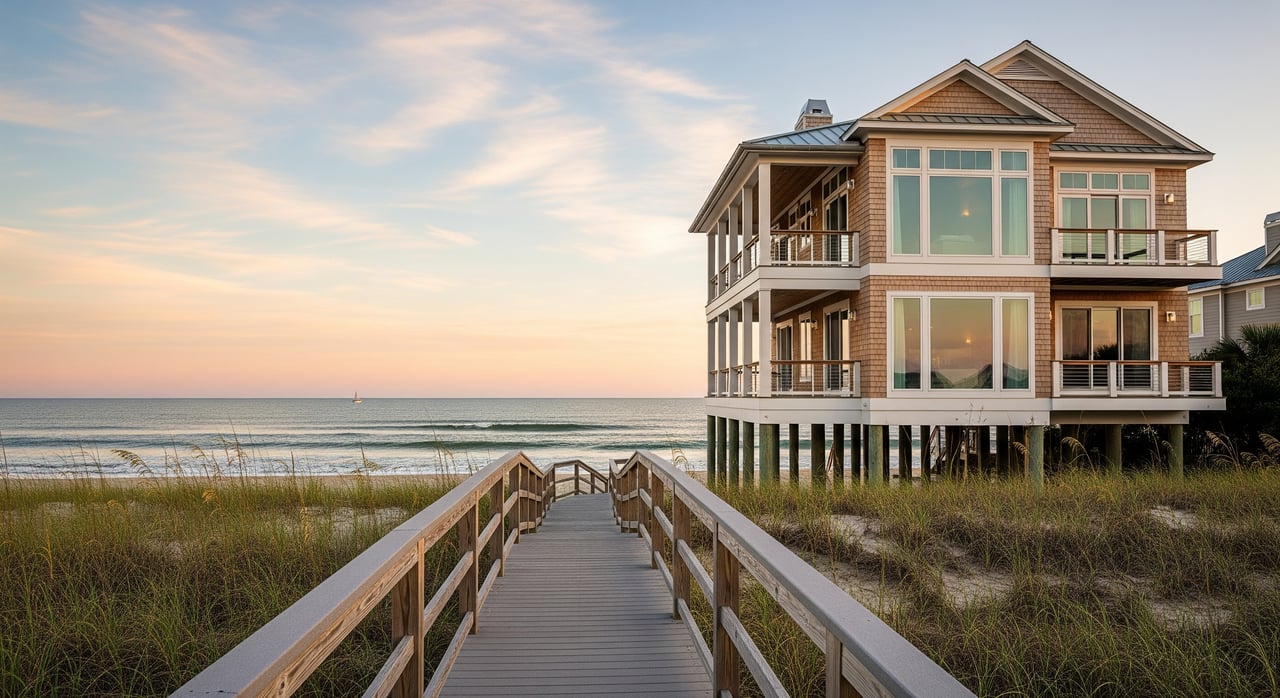
Picture yourself stepping from your back porch onto your boat, or waking up to ocean sunrises over soft sand. Buying waterfront in Wrightsville Beach can unlock that lifestyle, but it also comes with unique rules, permits, and maintenance decisions that inland buyers never face. You want the right shoreline, a legal dock, solid insurance, and confident resale. This guide gives you a clear roadmap tailored to Wrightsville Beach so you can buy with clarity and enjoy the water from day one. Let’s dive in.
Waterfront types in Wrightsville Beach
Oceanfront
Oceanfront puts you directly on the Atlantic with beach access and sweeping views. You will evaluate elevation, storm resilience, and beach nourishment history. Private docks are not part of oceanfront, so the value centers on beach access and view rather than boating access.
Sound and inlet-front
Sound and inlet-front parcels can offer private docks, boat lifts, and quick access to the Intracoastal Waterway and Masonboro Inlet. Depth, tidal range, and shoaling influence practical boat sizes and access. Expect more permitting and maintenance for shoreline structures than a typical inland home.
Canal-front and marina slips
Canal-front properties or homes with marina access focus on protected water for docking and shorter runs to open water. You will confirm dock rights, water depth at low tide, and any community dredging programs. Some buyers prefer the calmer water and shared maintenance of a community marina.
Marsh and estuarine frontage
Marsh-front living offers privacy, sunsets, wildlife, and natural buffers. Direct deep-water access may be limited by shallow areas or environmental constraints. A living shoreline or boardwalk may be preferred or required instead of a traditional bulkhead.
Permits, rights, and boundaries
Riparian and littoral rights
As a waterfront owner you may have rights to access the water and to seek permits for certain structures. These rights are shaped by North Carolina law, public trust areas, recorded easements, and any HOA covenants. A thorough title search ensures you understand what you can and cannot do on the shoreline.
Mean high-water line and public trust
Property lines often stop at the mean high-water line. Areas waterward of that line can be subject to public trust and use. Confirm recorded beach or walkway easements that may affect privacy and use.
Who issues permits
Waterfront structures typically require approvals from multiple agencies. The Town of Wrightsville Beach oversees zoning and building permits and elevation certificates. The North Carolina Division of Coastal Management regulates CAMA permits, and the U.S. Army Corps of Engineers may be involved for structures or dredging in navigable waters. Federal maps such as FEMA Flood Insurance Rate Maps and the U.S. Fish and Wildlife Service Coastal Barrier Resources System can impact buildability and insurance.
Key questions before contract
- Is the existing dock, boat lift, or bulkhead fully permitted and compliant?
- Are there recorded easements for public access, utilities, or neighbors’ docks?
- What is the flood zone designation and Base Flood Elevation for the structure?
- Is the property inside a CBRS unit that could affect flood insurance eligibility?
- Do HOA covenants limit docks, boat sizes, exterior changes, or rentals?
Docks, bulkheads, and maintenance
Dock depth and access
Water depth and tidal changes drive your boating experience. Visit at both high and low tide to confirm clearance and navigation. Study nearby shoaling and channel markers to understand routine access in varying conditions.
Maintenance costs and timelines
Plan for ongoing upkeep on docks, lifts, and bulkheads. Common tasks include pile and decking replacement, electrical and lighting maintenance, and lift servicing. Larger projects like bulkhead rebuilds or channel dredging can be significant and may take longer due to permitting.
Erosion, storms, and nourishment
Barrier islands can experience storm surge, overwash, and episodic erosion. Review elevation, structural resilience, and local storm history. Ask about prior beach nourishment projects and any past or potential assessments.
Dredging and channel access
Dredging typically requires multi-agency approvals and can be costly. If your dock relies on a canal or community channel, confirm how future dredging is funded and governed. Ask for historical dredging records from the seller or HOA.
What to inspect at the dock
- Piles, footings, fasteners, and decking for wear or movement
- Bulkhead alignment, signs of scour or undermining
- Age and condition of boat lifts, electrical systems, and lighting
- Encroachments over property lines or unpermitted structures
Financing and insurance
Lending on waterfront
Some lenders set higher down payments or stricter underwriting for coastal properties. Flood zone, structure condition, and elevation can influence loan terms. Work with a lender familiar with Wrightsville Beach that understands coastal underwriting.
Flood and wind coverage
Many waterfront homes require flood insurance, whether through the NFIP or private carriers. Premiums depend on flood zone, elevation, and building features. Wind and hurricane policies may have separate deductibles and standards, and docks or lifts may need separate endorsements.
Surveys, title, and certificates
Order a current boundary survey and elevation certificate to confirm property lines, mean high-water proximity, and first-floor height. Have your title company verify recorded covenants, shoreline permits, and any violations or exceptions. Confirm that permits for docks and bulkheads are documented and transferable when allowed.
HOA, rentals, and lifestyle fit
HOAs and reserves
On the island, some communities manage docks, bulkheads, and dredging through HOAs. Review bylaws, reserve studies, and meeting minutes to understand responsibilities and planned projects. A well-funded reserve can reduce the risk of surprise assessments.
Rental rules
If rental income is part of your plan, verify Town rules and any HOA restrictions. Minimum rental periods, safety requirements, and licensing can affect revenue models. Do not rely on past rental performance until you confirm current rules and fees.
Boating, privacy, and seasonality
Match the shoreline to your boating needs, from shallow-draft skiffs to larger vessels. Consider peak-season traffic, noise from events, and transient boat activity. Think through hurricane readiness, storage for gear, and access to marinas and marine services.
Resale outlook
Documented dock permits, quality shoreline structures, and clear maintenance records support future resale. Understand how flood zones, elevation, and long-term coastal risk can influence value. Properties with permitted slips and strong records tend to show better marketability.
Step-by-step buyer checklist
- Define your waterfront type and non-negotiables, including dock and boat needs.
- Engage a Wrightsville Beach agent with proven waterfront experience.
- Tour at both high and low tide and study neighboring docks and depth.
- Order a current boundary and elevation survey from a coastal surveyor.
- Schedule a home inspection plus a specialized marine and dock inspection.
- Request seller records for permits, dock plans, maintenance, and dredging history.
- Verify flood zone, BFE, and insurance availability; get quotes early.
- Confirm permitting history and any violations with local and state agencies.
- Review HOA bylaws, budgets, reserve studies, and prior special assessments.
- Pre-qualify with a lender experienced in coastal loans.
- Use due-diligence contingencies for survey, title, insurance, HOA, and marine structures.
- After closing, record elevation docs, transfer permits when allowed, and set a maintenance plan.
Local experts and records to consult
- Town of Wrightsville Beach Planning and Building for permits and elevation certificates
- New Hanover County Register of Deeds for recorded easements and covenants
- North Carolina Division of Coastal Management for CAMA permitting
- U.S. Army Corps of Engineers for navigable waters and dredging
- FEMA Flood Map Service Center for flood zones and elevation guidance
- U.S. Fish and Wildlife Service for CBRS mapping and eligibility impacts
- Local surveyors, marine contractors, coastal engineers, title companies, and insurance brokers
- A real estate broker with recent Wrightsville Beach waterfront transactions
Buying waterfront in Wrightsville Beach is about matching your lifestyle with the right shoreline and managing risk with smart due diligence. With the right plan, you can secure dock rights, protect your investment, and enjoy the water with confidence. If you are ready to start, schedule a private consultation with Austin Kenyon for tailored guidance and pre-market access.
FAQs
What should I check first when buying on Wrightsville Beach waterfront?
- Start by choosing your shoreline type, then confirm dock rights, permits, flood zone, and insurance availability before you write an offer.
How do I know if a Wrightsville Beach dock is permitted?
- Ask for permit records and drawings, verify with the Town and state files, and include a specialized dock inspection and permit review in due diligence.
Will flood insurance be required on Wrightsville Beach?
- If the home is in a mapped flood zone and you have a loan, flood insurance is typically required; get quotes based on elevation and construction features.
Can I dredge a shallow canal near my Wrightsville Beach home?
- Dredging usually needs approvals from state and federal agencies and can be costly; confirm history, funding, and feasibility before relying on it.
Do HOAs on Wrightsville Beach cover dock and bulkhead repairs?
- It depends on the covenants; review HOA bylaws, budgets, and reserve studies to see who pays for maintenance and how assessments are handled.
Are short-term rentals allowed on Wrightsville Beach waterfront homes?
- Rules vary by Town ordinance and HOA; confirm current permits, minimum stays, and taxes before assuming rental income.