If you are thinking about buying coastal land near Wilmington, the view is only part of the story. A great-looking lot can still come with zoning limits, floodplain requirements, access issues, or utility questions that affect what you can actually build. The good news is that with the right due diligence, you can evaluate a parcel with more clarity and move forward with confidence. Let’s dive in.
Start With Jurisdiction
One of the first things to confirm is which local government controls the parcel. In the Wilmington area, that can change the review process in a big way. Lots inside Wilmington city limits follow City of Wilmington rules, while unincorporated parcels follow New Hanover County rules, and nearby beach towns may have their own ordinances.
That matters because planning, zoning, stormwater, and development review can all work differently depending on location. According to New Hanover County Planning & Land Use, the county serves only unincorporated areas, while the city handles zoning, floodplain determinations, and development review for parcels inside Wilmington city limits.
For coastal property, permit questions can overlap. The county also administers the state’s minor CAMA permit program in both unincorporated New Hanover County and the City of Wilmington, which means a waterfront or near-water lot may involve both local and coastal review steps.
Check Zoning Before You Price Value
Zoning is one of the biggest factors in determining whether a lot fits your plans. It governs allowed uses, lot size, setbacks, building placement, height, and whether you may need rezoning, conditional rezoning, or a special use permit.
In practical terms, a parcel is worth more to you when the intended use is already supported by the current zoning. If the lot requires a zoning change before you can build what you want, your timeline, risk, and carrying costs may increase.
For city parcels, Wilmington offers pre-transaction tools such as zoning verification letters and certificates of zoning compliance. Those can help you confirm how a property is currently classified and whether there are known issues to address early.
Questions To Ask About Zoning
- What zoning district applies to the lot?
- Is your intended use allowed by right?
- What are the setback, height, and lot coverage rules?
- Would the project require rezoning or special approvals?
- Is the parcel in the city, county, or another coastal jurisdiction?
Review Floodplain Risk Early
In coastal New Hanover County, flood risk is not a side issue. It directly affects build costs, insurance, financing, and long-term resale appeal.
The official source for flood maps is FEMA’s Flood Map Service Center. County floodplain rules require new construction and substantial improvements in flood-prone areas to meet elevated, flood-resistant standards. The county also notes that financing a purchase or build in the floodplain is often more difficult without flood insurance.
Even if a lot seems attractively priced, floodplain conditions can change the true cost of ownership. Elevation requirements, construction design changes, and insurance considerations should all be part of your analysis before you commit.
Understand CAMA Coastal Rules
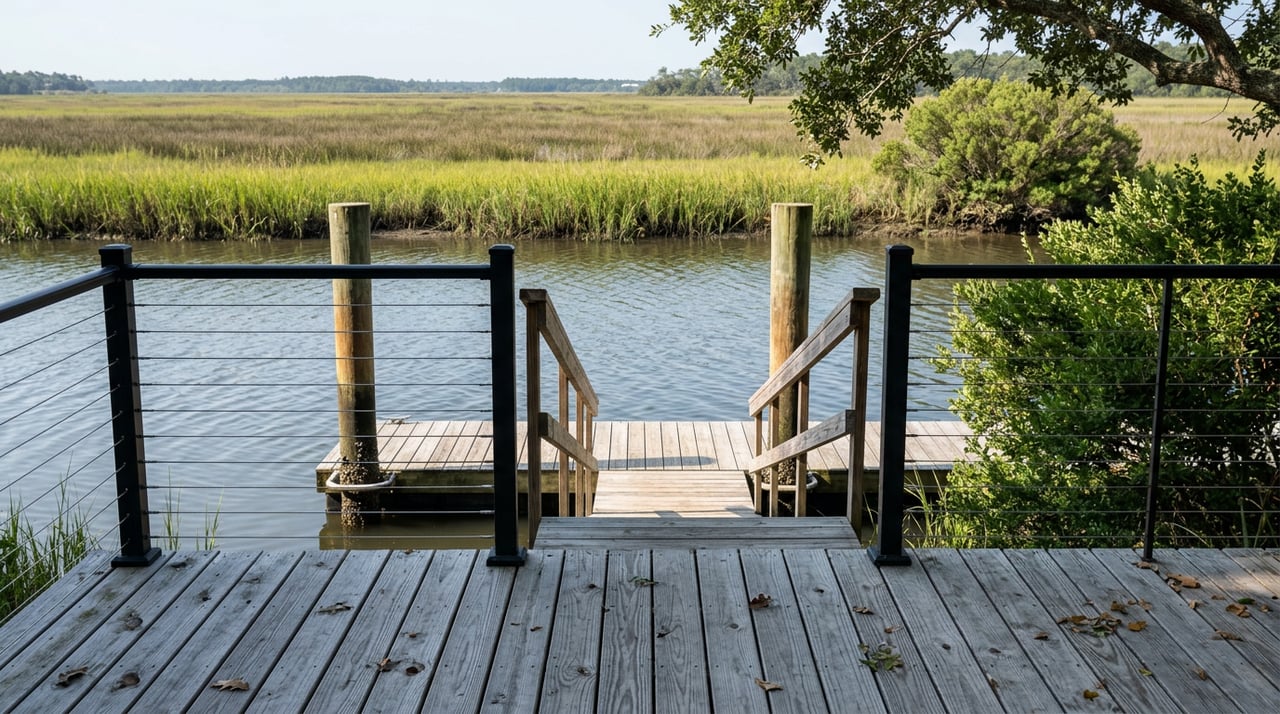
Near the water, Coastal Area Management Act review can be a major part of land evaluation. A lot may look buildable on paper but still require a coastal permit based on how close it is to estuarine shoreline, the ocean beach, or an inlet.
According to New Hanover County’s CAMA permit guidance, a minor CAMA permit can apply in Areas of Environmental Concern, including areas within about 75 feet of estuarine shoreline, about 300 feet of the ocean beach, or about 1,000 feet of an inlet. The application typically requires a site drawing, ownership statement, adjacent riparian-owner notice, and a $100 fee.
Minor permits are ordinarily decided within 25 days, with a possible 25-day extension, and they generally expire on December 31 of the third year after issuance. Larger or more complex projects may require a major CAMA permit instead.
Why CAMA Matters To Buyers
- It can affect whether and how you build
- It may shape your site design and timeline
- It can add another layer to due diligence
- It often matters most on waterfront and near-water lots
Confirm Stormwater Requirements
Stormwater is one of the most overlooked issues in land purchases, especially for infill parcels or potential subdivisions. It can influence site design, approvals, cost, and even whether a project is practical as planned.
In Wilmington, the city’s stormwater permit process applies to new development, redevelopment, and expansions or modifications. In unincorporated New Hanover County, a drainage plan is required for all development, and a county stormwater permit is required when a project creates 10,000 square feet or more of new impervious surface.
Stormwater rules do not work the same everywhere. The county does not regulate stormwater inside Wilmington or the beach towns, so you need to know exactly which jurisdiction applies before assuming what the approval path will be.
Verify Access And Frontage
A lot is only as useful as its legal and practical access. If a parcel fronts a state highway, driveway approval can become a separate step that affects timing and design.
Under NCDOT driveway access policy, simple requests can take four weeks or less, while complex requests can take eight weeks or more. That may not sound dramatic at first, but delays in access approval can hold up the larger project timeline.
Inside the city, work in the public right-of-way may also require a local permit. If your land strategy depends on a new entrance, driveway adjustments, or frontage improvements, access should be reviewed as early as zoning and floodplain.
Investigate Water, Sewer, Septic, And Wells
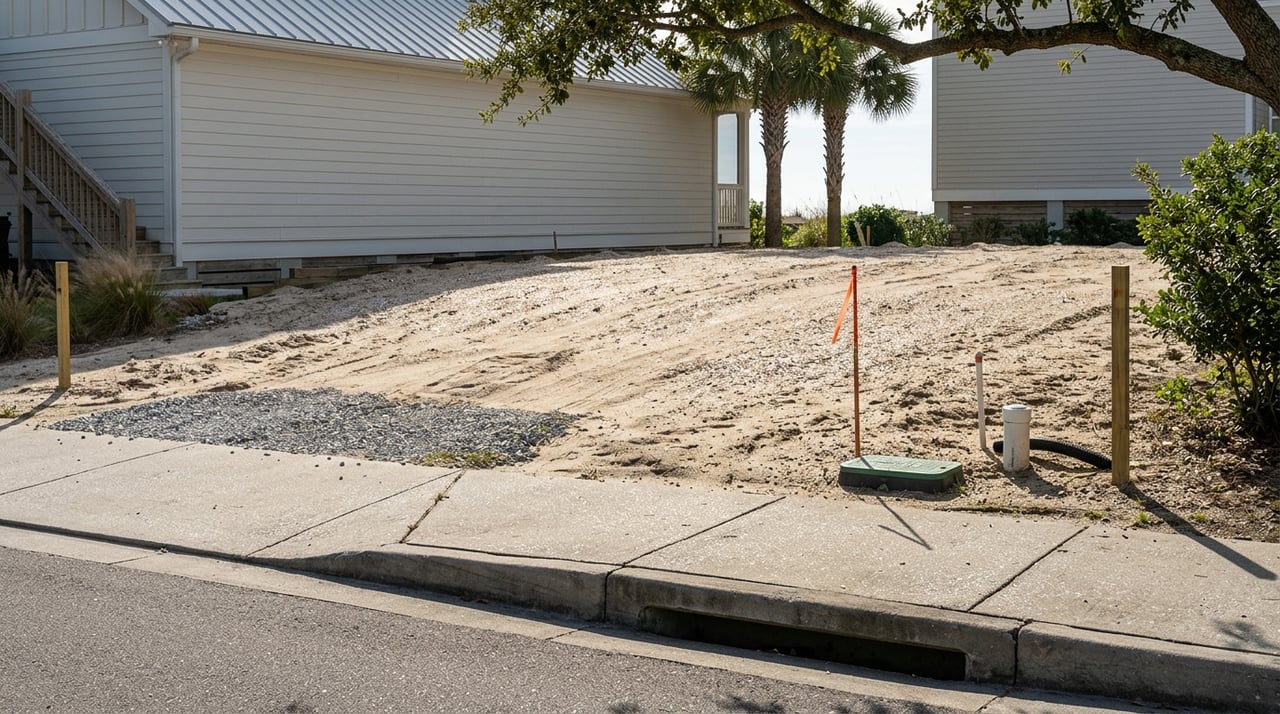
Utilities can quickly separate a straightforward lot from a riskier acquisition. A vacant parcel should never be assumed to have public water or sewer just because nearby homes do.
In this market, CFPUA is the public water and sewer provider for Wilmington, Wrightsville Beach, and much of New Hanover County. For vacant lots, CFPUA advises confirming service availability directly with Development Services, and its sewer-capacity mapping is aimed more at subdivisions and commercial projects than a typical single-home site.
If public utility service is not available, site feasibility often depends on septic and well approvals. New Hanover County’s On-Site Well & Water Protection program handles site evaluations, inspections, and testing for septic systems and private wells, and North Carolina law requires permits for private well construction, repair, and abandonment.
The bottom line is simple: a parcel without confirmed water, sewer, septic, or well feasibility should be viewed as a higher-risk purchase than one with documented utility approval.
Know The Approval Timeline
Some lots are ready for the next step. Others require a long series of reviews before you can build. Understanding that sequence helps you evaluate both opportunity and risk.
In the City of Wilmington, site plan approval is required for all new development and redevelopment. New projects begin with a Pre-TRC consultation through the city’s portal, and the city says the formal TRC completeness check takes about one week, with the next TRC meeting generally about five weeks after submission when the package is complete.
City rezonings follow a public process. Wilmington requires a pre-application meeting before rezoning submittal, and conditional rezonings also require a neighborhood meeting 10 to 25 days before filing. Rezonings are heard monthly by the Planning Commission and may then move to City Council.
For county properties, New Hanover County Planning & Land Use handles rezonings, special use permits, subdivision review, variances, and appeals. The county’s review process can involve Planning & Land Use, Engineering, Fire Services, CFPUA, and Environmental Health, with other agencies also participating when needed.
Think About Resale Before You Buy
Smart land buyers do not just ask, “Can I buy this lot?” They ask, “How marketable will it be later?” That is especially important in coastal markets, where entitlement and infrastructure questions can have a direct effect on financing and buyer demand.
Lots that have already addressed zoning, floodplain, CAMA, access, and utility questions are often easier to finance and easier to sell. Those items affect permitability, flood insurance, and construction timing, all of which shape how future buyers see value.
For city lots, title and covenant details may matter too. Wilmington notes that stormwater deed restrictions may need to be recorded before a lot is sold, which means your disposition planning should include more than just physical site work.
A Practical Coastal Lot Checklist
Before moving forward on a Wilmington-area land purchase, it helps to work through a consistent checklist:
- Confirm the parcel’s jurisdiction
- Verify zoning and intended use
- Review FEMA flood maps and local floodplain rules
- Determine whether CAMA review applies
- Check stormwater requirements
- Confirm legal and physical access
- Verify water and sewer availability with CFPUA
- If needed, evaluate septic and well feasibility
- Understand the approval path and timeline
- Consider future resale and financing appeal
Why Local Guidance Matters
Coastal lots around Wilmington can be compelling opportunities, but they are rarely simple. The strongest acquisitions usually come from asking the right questions in the right order, before emotion or momentum takes over the process.
That is where local market knowledge can make a real difference. From city parcels to near-water sites and builder-oriented lot opportunities, the value is often in understanding how zoning, floodplain review, CAMA, utilities, and access fit together from the start.
If you are evaluating coastal land or lots around Wilmington and want a more strategic read on a parcel, Austin Kenyon can help you assess the opportunity with local insight and a clear, practical approach.
FAQs
What should you check first when evaluating land in Wilmington?
- First, confirm whether the lot is inside Wilmington city limits, in unincorporated New Hanover County, or in another coastal jurisdiction, because the rules and review process can differ significantly.
How does zoning affect a coastal lot in Wilmington?
- Zoning determines allowed uses, lot size, setbacks, height, and whether you may need rezoning or special approvals before building.
Why does floodplain status matter for New Hanover County land?
- Floodplain status can affect construction standards, insurance needs, financing options, and the total cost to build on the property.
When does a CAMA permit apply to coastal lots near Wilmington?
- A CAMA permit may apply when a lot is in an Area of Environmental Concern, such as near estuarine shoreline, the ocean beach, or an inlet, depending on the site location and scope of work.
How do you verify water and sewer service for a vacant lot in Wilmington?
- You should confirm service availability directly with CFPUA Development Services rather than assuming a vacant parcel already has usable public utility access.
What if a Wilmington-area lot does not have public utilities?
- If public service is unavailable, you may need septic and private well approvals through New Hanover County Environmental Health before the lot is considered feasible for development.